Fandango: Movies & Series
- 4.4
- Rating
- 10.00M
- Installs
- Free
- Price
 Analysis by App-foxy
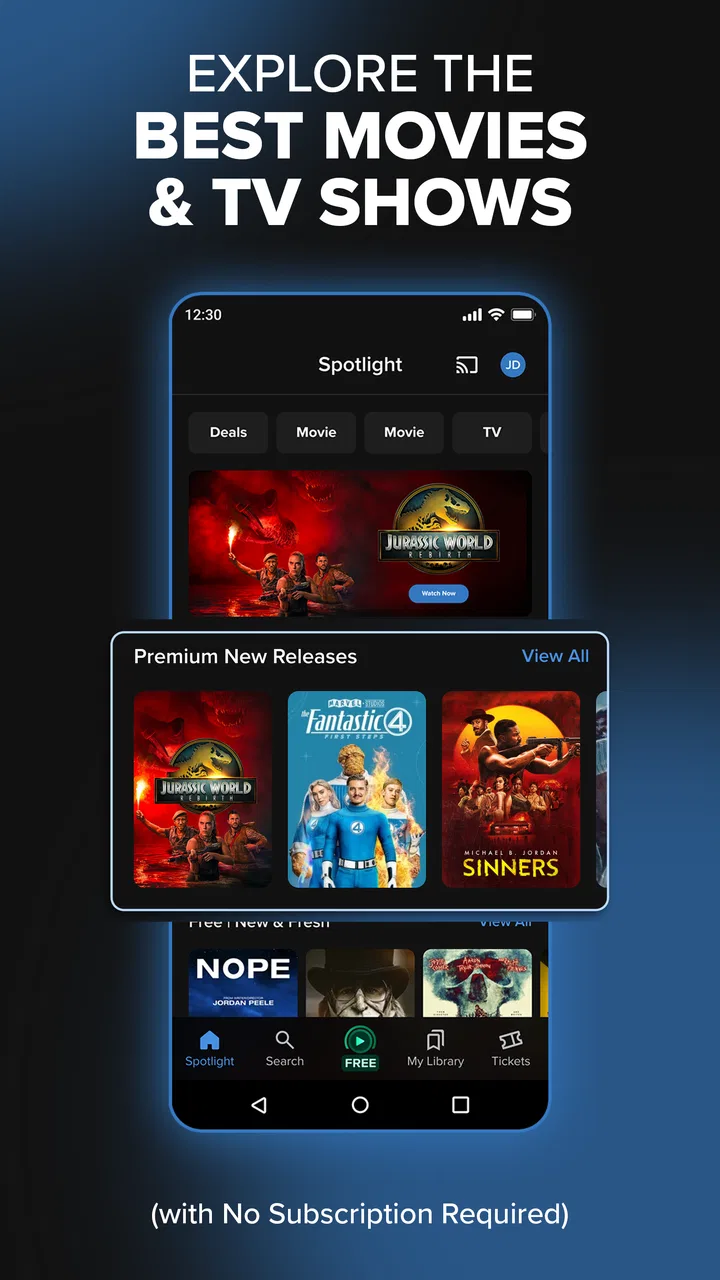
I tried Fandango at Home: Movies & TV as the sort of person who wants to find something to watch without turning the search itself into an evening project. It is a free entertainment app from Fandango at Home, built around streaming movies and television. The basic appeal is easy to understand: open it when you want a film or show, browse what is available, and decide whether it fits your plans. My experience was generally positive, especially when I already had a title or type of viewing in mind, but it is not a magic replacement for every streaming service. It works best when you treat it as a flexible home for choosing and watching content rather than assuming every title is included in one subscription.
What to expect when you open Fandango at Home
The first thing I noticed is that this is a practical movie and TV streaming app, not a social platform or a narrow channel app. Its Entertainment category makes sense because the whole experience is focused on finding something to watch and getting from browsing to viewing with as little friction as possible. The developer shown for the app is Fandango at Home, and the service has been available since December 19, 2012, so it feels like an established destination rather than a newly assembled catalog.
The app is free to install, which makes trying it low-risk. That does not mean every viewing choice is automatically free, though. The presence of in-app purchases means you should pay attention to the action presented for a title before assuming that it is part of a no-cost selection. The listed in-app purchase amount can reach $99.99 per item, so I would not tap through a purchase screen casually. I prefer to pause, read the title and transaction wording, and make sure I am choosing the option I actually want.
You May Also Like

 Google Keep - Notes and lists
Google Keep’s Quiet Growth Shows the Appeal of Simpler Notes
As mobile work gets busier, Google Keep keeps winning a simple contest: capture a thought quickly, find it later, and get on with the day.

 Blood Strike: 2.5 Anniversary
Blood Strike’s Loadouts Turn Every Drop Into a Tactical Gamble
A close look at Blood Strike’s custom loadouts: how fast access to signature weapons reshapes its battle royale rhythm, rewards preparation, and narrows the gap between fights.

 Pandora - Music & Podcasts
Pandora’s Music Is Easy to Start, but Harder to Recover
Pandora’s strength is its low-effort path from a seed to a station. Its weak spot is how much confidence it asks you to place in connection, setup, and quiet recovery.

 8 Ball Pool
 Is Built on Rivalries, Rematches, and Routine
A close look at the rivalries, rematches, shared routines, and unanswered safety questions that turn a quick pool match into a persistent mobile community.

 Samsung Music
’s Quiet Strength Is Playing What You Already Own
Its reach comes less from spectacle than from dependable access to a personal library. That simplicity is both the app’s strongest retention engine and its ceiling.

 AccuWeather: Weather Radar
AccuWeather Review: A Quick, Clear Forecast for Everyday Decisions
For everyday plans, the best forecast is the one you can understand quickly. AccuWeather makes rain timing, radar, and local conditions easy to act on, with a few trade-offs.
More From Our News Desk



That distinction is important for first-time users. A streaming app can combine several kinds of access: something you can watch immediately, something that requires a transaction, and something that may be unavailable in your current situation. I found the experience easier when I approached the catalog as a place to make a viewing decision, not as a promise that one monthly payment unlocks everything. If your main goal is to watch whatever catches your eye without considering separate costs, a conventional all-you-can-watch subscription service may feel simpler.
Fandango at Home has a 4.4 average from around 214,000 ratings, and it has passed 10 million installs. Those figures suggest that the app has found a substantial audience, but they should not decide the question for you. The better test is whether its way of handling movie and television access matches your habits. Someone who watches only a few carefully chosen films may appreciate that flexibility more than someone who wants a huge rotating subscription library.
Who will get the most from it
I would recommend starting here if you often choose a specific movie for a family night, want to revisit a favorite title, or dislike paying for several subscriptions just to watch one particular program. It can also suit people who prefer keeping their entertainment choices in one recognizable place instead of searching across several unrelated apps. The Teen content rating makes it more appropriate for older children and adults than for unsupervised young viewers, so families should still make their own decision about what is suitable.
It is less convincing for someone who wants a purely free catalog, a single subscription with no title-by-title decisions, or a service centered on live television. I would also look elsewhere if your priority is a tightly curated recommendation system that constantly introduces unfamiliar shows. Fandango at Home is more useful when I have an intention, even a loose one, such as “a light comedy tonight” or “that film everyone mentioned,” than when I expect the app to invent my entire evening.
Getting through the first setup without overthinking it
After installing the app, I suggest beginning with the simplest possible goal: find one title you genuinely want to watch. Do not start by trying to understand the entire catalog or by building an elaborate watchlist. Browse the opening screen, use the available discovery controls, and open a title that matches your mood. This gives you a quick sense of how the app presents viewing choices before you invest time in organizing anything.
When the app asks you to move toward watching or obtaining a title, read the screen carefully. The most useful habit is to distinguish the title page from the final access step. A title page tells you what you are considering; the next screen may determine whether you are streaming, renting, buying, or using another access route. I would never hand my phone to a child at that point, because a large entertainment catalog can make an accidental tap more costly than expected.
Account setup is easiest when you use details you can access without interruption. If you are already trying to start a film, avoid stopping halfway through to search for an old password or change unrelated settings. Finish the basic sign-in process, return to the title you selected, and confirm that the app remembers your place. The goal of the first session is not perfect configuration; it is reaching a clear, successful viewing decision.
One small workflow helped me: I made my first search deliberately specific, then tested a broader browse afterward. Searching for a known title shows whether the app can get you where you need to go quickly. Browsing afterward reveals whether you enjoy its way of presenting alternatives. These are different jobs, and judging the app only by one of them can give you the wrong impression.
Your first meaningful success
For a new user, success is not simply opening the app. It is selecting a title, understanding the access choice, and reaching playback or the next clearly explained step without confusion. I recommend doing this with a film you already know you want to see. Familiar content removes the distraction of wondering whether the story is worth your time, leaving you free to evaluate the app’s navigation and transaction flow.
A realistic example would be a Friday evening when two people in the same home want a film but do not want to subscribe to another service. I would open the app, search for the agreed title, inspect the available viewing option, and confirm the cost or included status before proceeding. If the choice suits the plan, I would start watching. If it does not, I would back out rather than treating the first result as the only possible answer. That simple pause is the difference between using the app deliberately and clicking through on autopilot.
Once playback begins, pay attention to the practical details that matter in your own room. Is the title the correct version? Is the audio comfortable? Does the screen remain easy to navigate when you pause? These observations are more valuable than a quick first impression of the home page. An app can look polished while still being awkward for the way you actually watch, particularly if you switch between a phone and a larger screen or share control with someone else.
I also recommend deciding in advance whether you are choosing something for immediate viewing or merely saving an idea for later. Mixing those two intentions can make browsing feel endless. For immediate viewing, use a narrow target and stop once you find an acceptable option. For future viewing, take a moment to organize your choices so that you do not have to repeat the same search during your next tired evening.
Where first-time users can become confused
The biggest source of uncertainty is the difference between installing a free app and receiving free access to every title inside it. Fandango at Home costs nothing to download, but the viewing path can involve in-app purchases. That is normal for a service with flexible title access, yet it is easy to forget when the first screen feels like a traditional subscription catalog. I would treat every title’s action button as a decision point and read the wording before confirming.
A second confusion is assuming that a search result equals a recommendation. Search helps you locate something; it does not necessarily mean that the title is the best match for your mood or that it is available under the same conditions as another title. I found it more useful to compare a couple of nearby choices instead of accepting the first result. This is especially helpful when several versions, seasons, or similarly named programs appear close together.
Another issue is the temptation to browse indefinitely. Entertainment apps are designed to make discovery pleasant, but too many options can turn a quick decision into fatigue. My workaround is to set a personal limit: choose a genre, a familiar actor, a known title, or a short list of possibilities, then make a decision. Fandango at Home becomes more efficient when I bring a little structure to it rather than expecting the home screen to solve indecision.
Families should also treat the Teen rating as a useful signal, not a replacement for supervision. The rating tells me that the app is intended for a teen audience, but it does not mean every movie or show will suit every teenager. If a younger viewer is using the device, I would choose the content myself and keep purchase confirmation out of casual reach. That is a sensible habit for any entertainment marketplace, and it matters here because the app supports paid access.
Three habits that make the app more useful
First, separate discovery from commitment. I browse freely only until I find a few candidates, then I inspect one title at a time. This prevents a promising thumbnail from becoming an accidental purchase and makes it easier to compare the actual viewing choices. It also keeps the app from becoming a replacement for deciding what you want to watch.
Second, use a known title as a diagnostic tool. A familiar movie or show tells you whether the search route, title information, and access wording are understandable. After that, try a less specific search to see whether discovery works for you. This two-stage approach is more revealing than spending the first session scrolling through artwork.
Third, match the app to the event. For a planned movie night, I would decide the budget and the title before opening the purchase screen. For casual background viewing, I would favor an option that is clearly available without a separate decision. The trade-off is straightforward: Fandango at Home can be convenient when you want one particular thing, while a broad subscription service may be better when you want unlimited spontaneous sampling.
A fourth habit is worth mentioning for shared households: agree on who is making the final selection. If several people browse at once, the app can become a negotiation space rather than a viewing tool. One person can narrow the options, another can make the final choice, and everyone can confirm the title before watching. That sounds minor, but it avoids the common problem of starting something that nobody actually wanted.
How it compares with familiar alternatives
Compared with a standard subscription streaming service, Fandango at Home feels more title-focused. Subscription platforms are usually strongest when I want to browse a large included library and accept whatever is currently available. This app is more appealing when I have a specific movie or television choice and do not want that decision controlled entirely by a rotating subscription catalog. The downside is that flexible access can require more attention at the moment of selection.
Compared with free, advertising-supported entertainment apps, it offers a different bargain. Free services can be attractive when avoiding transactions is the top priority, but they may ask me to accept advertising, a narrower selection, or less control over the exact title. Fandango at Home makes more sense when the exact film matters more than having a completely cost-free session. Neither approach wins universally; the right choice depends on whether your scarce resource is money, time, or patience.
Compared with renting or buying through a general-purpose digital store, this app keeps the experience centered on movies and TV rather than mixing entertainment with unrelated purchases. That focus is helpful when I already know what I want to watch. A general store may still be preferable if you want one account and one purchasing routine across many types of digital content. I would choose Fandango at Home for entertainment-specific browsing and a broader store for a more all-purpose media library.
The app’s audience size and long availability give it a sense of familiarity, but I would not confuse familiarity with a guarantee that every household will prefer it. The real advantage is the combination of a free entry point and a viewing model that can suit specific-title decisions. The real cost is the extra responsibility of understanding what you are selecting before you confirm it.
When I would skip it
I would skip Fandango at Home if my only requirement were “open one app and watch anything without checking individual access terms.” In that situation, a subscription service with a clearly defined included catalog would probably feel calmer. I would also skip it for very young children unless an adult was handling the browsing and selection, because the Teen rating and paid-access possibilities make unsupervised exploration a poor fit.
I would think twice if I rarely watch movies or television on demand. An app built around choosing titles has limited value if you mainly watch live broadcasts, short clips, or content from a service you already use every day. Installing another entertainment app is worthwhile only when it solves a real problem, such as finding one particular film or reducing the need to maintain several subscriptions.
Finally, I would not use it as my only entertainment option if I depend heavily on personalized discovery. I found that it rewards a user who knows what kind of evening they want. If you want an app to learn your taste and constantly surprise you with deep recommendations, another platform may provide a more satisfying experience. Fandango at Home is strongest as a purposeful tool, not necessarily as an endless digital channel.
The next step after your first watch
After your first successful viewing, the best next step is to decide whether the app fits a recurring pattern in your life. Try it once for a specific movie, once for browsing television, and once when choosing something with another person. Those situations reveal different strengths: direct search, catalog discovery, and shared decision-making. You will quickly learn whether its flexibility saves you time or creates too many choices.
If it becomes part of your routine, keep your process simple. Start with a clear intention, check the title’s access route, confirm that the content suits the audience, and only then proceed. I would rather spend a few seconds verifying a selection than turn a relaxed evening into a billing or content dispute. That habit also makes the app more approachable for family members who are less comfortable with digital purchases.
My final view is that Fandango at Home: Movies & TV is a useful free entertainment app for people who want a direct route to particular movies and television choices. I like its flexibility and the fact that it does not force every viewer into the same subscription habit. At the same time, the app asks me to pay attention: free installation is not the same as universally free viewing, and a large catalog can still leave me undecided. If you approach it with a specific title or a clear viewing plan, it can be a reassuring place to start. If you want unlimited included content with no purchase decisions, choose a different kind of streaming service instead.
For my own use, that balance is the deciding factor. I would keep it available for planned movie nights, one-off choices, and moments when I know exactly what I want. I would not rely on it to replace every other entertainment service. Its best promise is simple, controlled access to the movie or show you came looking for, provided you take one careful look at the viewing option before pressing ahead.
FAQs for Fandango: Movies & Series
01What is Fandango at Home: Movies & TV?
Fandango at Home: Movies & TV is a streaming service app that allows users to rent or purchase the latest movies and TV shows. It offers a vast library of content, including new releases and classics, accessible directly from your Android or iOS device. It’s a convenient way to enjoy entertainment from home.
02How much does it cost to use Fandango at Home?
Fandango at Home does not require a subscription. Instead, users pay per rental or purchase. Rental prices start at around $3.99, while purchases can vary depending on the movie or show. This pay-as-you-go model allows flexibility and control over your viewing expenses.
03Can I watch Fandango at Home content offline?
Yes, Fandango at Home allows users to download purchased or rented content for offline viewing. This is particularly useful for those who want to watch movies or shows during travel or without an internet connection. Ensure you have sufficient storage space on your device before downloading.
04On which devices can I use Fandango at Home?
Fandango at Home is compatible with a variety of devices, including Android smartphones and tablets, iPhones, iPads, and certain smart TVs. It also supports Chromecast, allowing you to stream content to your TV for a larger viewing experience. Check the app’s compatibility with your device before downloading.
05Is there a trial period or free content available?
Fandango at Home does not offer a traditional trial period since it operates on a pay-per-view basis. However, it occasionally provides deals or promotions on certain titles. Keep an eye on the app for any special offers that might include discounted rentals or purchases.
Pros
- Wide selection of movies and TV shows.
- User-friendly interface and navigation.
- High-quality streaming options available.
- Regular updates with new content.
- Supports multiple device streaming.
Cons
- Requires a stable internet connection.
- Subscription costs can add up.
- Limited offline viewing options.
- Occasional buffering issues reported.
- Some content may not be available in all regions.

Fandango: Movies & Series
Gallery